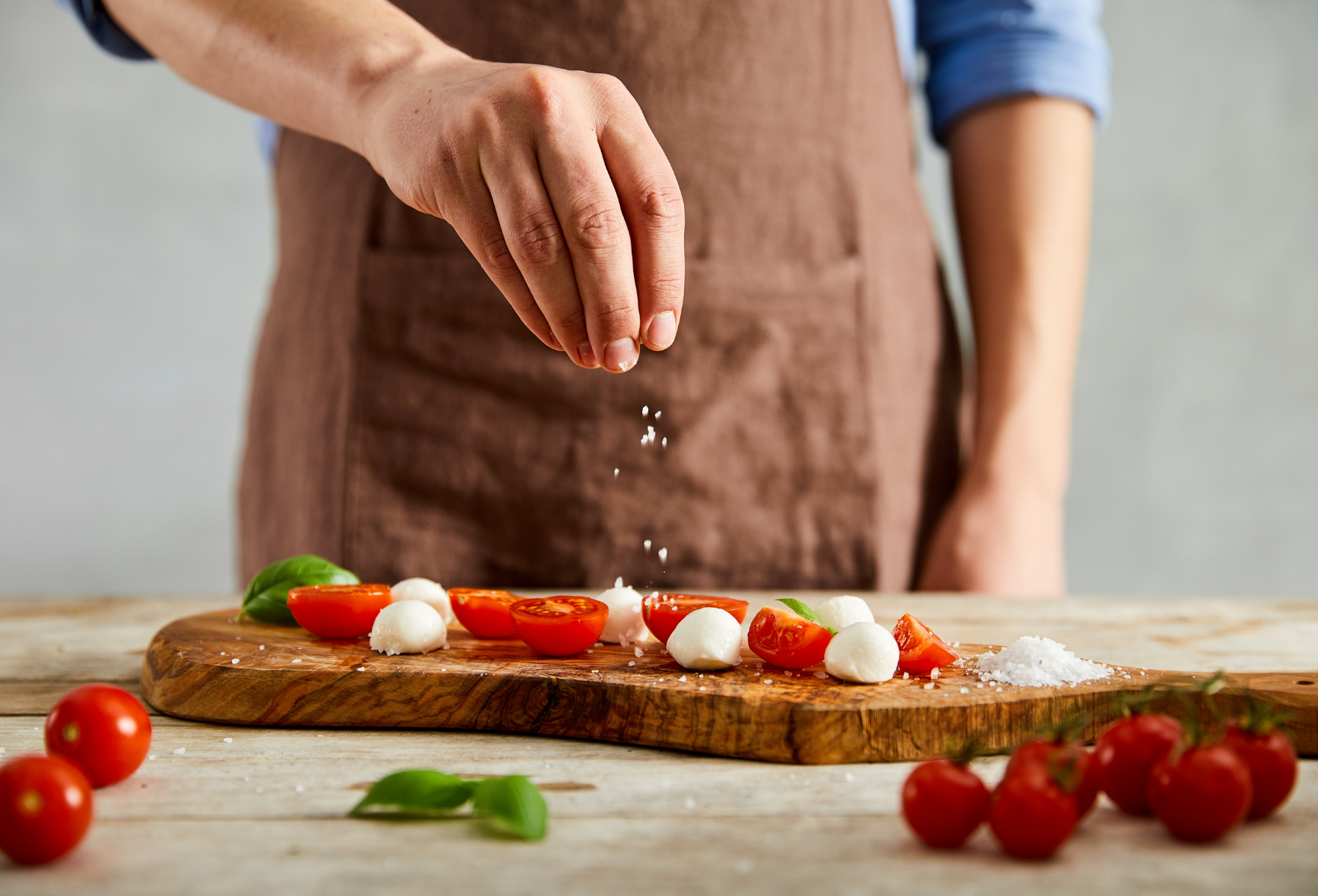
 Salt! It’s delicious. As a qualified chef, it is literally my job to add salt to everything, as it enhances the natural flavours of food. However, we have all heard that salt can also be bad for our health. But do you know why? And how much is too much?
What is salt, and what’s it for?
Salt is a chemical compound made up of sodium and chloride. Sodium naturally occurs in many foods and has biological functions in the body, including maintaining fluid balance, nerve transmissions, and muscle contractions.
However, consuming too much sodium over a long period of time can have negative effects on the body. Here’s how:
- Increased risk of cardiovascular disease: Because sodium causes the body to retain fluids, this can increase blood volume, putting pressure on arteries and the heart, leading to conditions such as high blood pressure, stroke, and cardiovascular disease.
- Kidney damage: The kidneys work hard to regulate the body’s sodium levels. When sodium intake is too high, this puts pressure on the kidneys to work harder, which can damage the kidneys and may lead to chronic kidney disease
- Increased Risk of Osteoporosis: High consumption of sodium can cause your body to lose calcium, which can lead to reduced bone density, increasing the risk of osteoporosis.
It’s important to note that although too much salt can lead to health issues, not enough salt can also lead to nutritional deficiencies. Therefore, like everything in life, it’s important to have balance.
How much is too much?
The Australian Dietary Guidelines recommend adults over 18 years of age, consume no more than 2g of salt per day (that’s less than 1 teaspoon a day!). This is quite difficult to achieve, but any reduction is better than nothing.
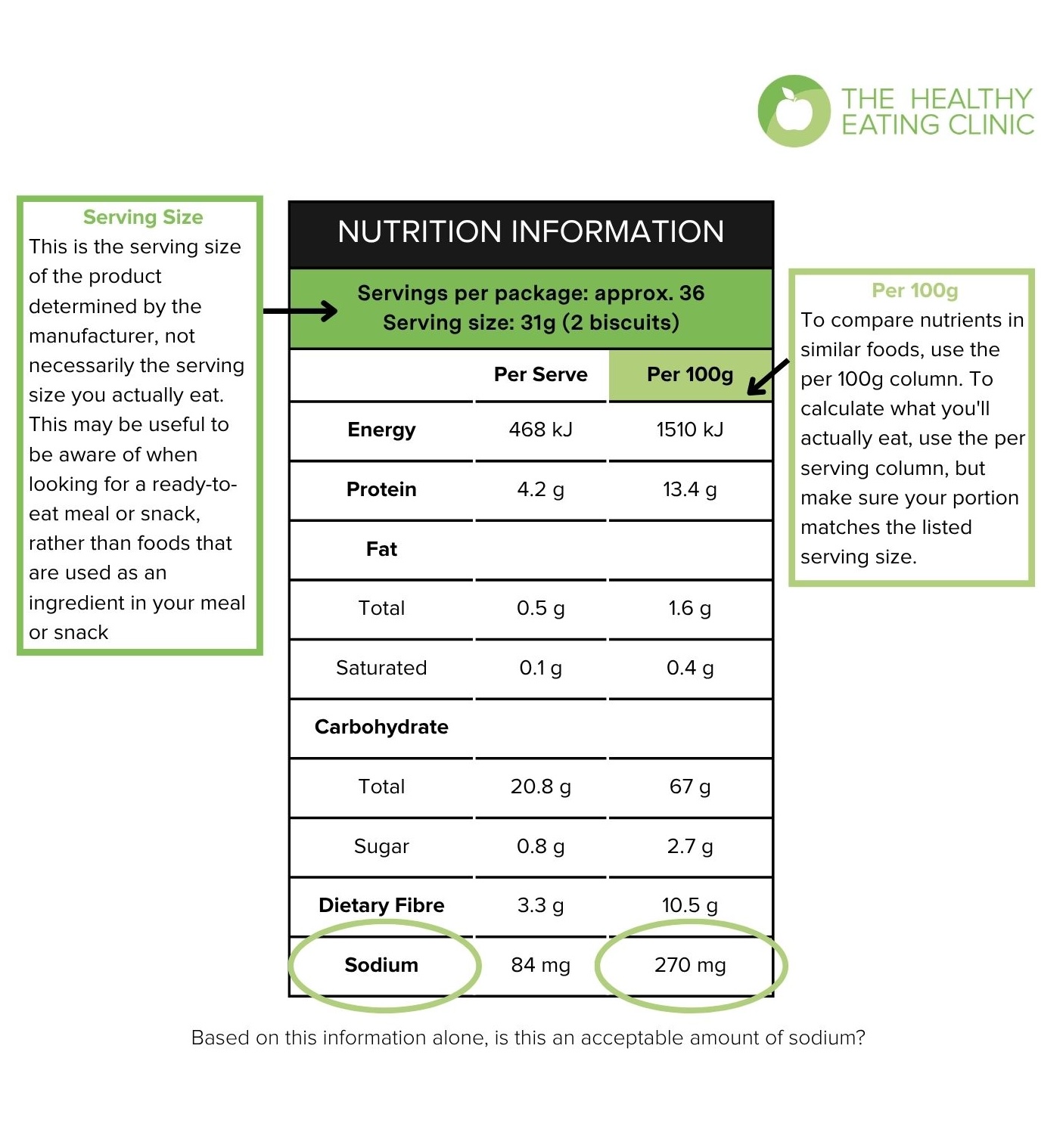
One way you can start reducing salt intake is by understanding how to read nutrition information panels on food labels.
When reading nutrition labels for packaged foods, aim for foods that ideally contain less than 120mg per 100g of sodium, or if that’s not practical, try not to consume products that contain more than 400mg of sodium per 100g.
What does 2g of salt a day look like?
This is an example of what a day of food might look like with less than 2g of salt:
- Breakfast: Porridge made with milk + berries
- Snack: No added salt peanut butter + apple slices
- Lunch: Homecooked roast chicken breast and salad wrap with avocado and lemon juice
- Snack: Yoghurt + banana
- Dinner: Baked salmon (flavoured with herbs and lemon) with boiled baby potatoes and asparagus
- Dessert: Chocolate pudding + raspberries
Estimated Sodium intake: 1.53g
Are some salts better than others?
You may have heard that pink Himalayan or sea salt is better for you. Although some types of salt may contain other nutrients, such as trace minerals and iodine, they still have the same negative effects on the body as normal table salt.
Reducing salt with simple swaps
Here are some suggestions for swapping some foods high in salt for lower salt alternatives!
Swap these |
For these |
|---|---|
| Added salt or salty sauces | Chilli, herbs, spices, lemon juice, garlic, ginger, and flavoured oils |
| Sauces such as soy sauce, tomato sauce, BBQ sauce, sriracha, etc. | Choose reduced salt versions or try to make your own. |
| Processed deli meats and sausages | Freshly cooked meat |
| Store-bought marinated meats | Marinate your own without adding salt |
| Pre-prepared roast chicken | Homemade roasted chicken |
| Potato chips, popcorn, crackers | Raw nuts, homemade popcorn, homemade roasted chickpeas, nut bar, plain rice cakes |
| Hard cheeses, feta cheese, haloumi | Cottage cheese, ricotta cheese or mozzarella |
But I love salt and can’t imagine a life without it!
If you’ve ever tried reducing salt, you know things will taste blander. However, our taste buds grow accustomed to the taste of salt, which means the more salt we eat, the more we want it. Conversely, the less salt we eat, the less appealing it becomes. Therefore, it’s important to give yourself a few weeks to let your taste buds adjust. You can think of this as a withdrawal period. Just remember that this withdrawal period doesn’t last forever! It’s important to be persistent and patient, and eventually you will get used to it, and things will start to taste delicious again. Also, make sure you’re drinking plenty of water to help reduce cravings for salt.
In summary, here are these are the main ways you can be reducing salt on a regular basis:
- Aim to eat whole, unprocessed foods such as fruit, vegetables, and fresh meat where possible.
- Read labels on foods and aim for lower salt varieties.
- Avoid adding salt when cooking meals , and don’t put salt on the dining table.
- Cook for yourself where possible instead of eating out or relying on convenient options.
- Be patient and persistent with yourself when trying to cut out salt.
If you would like more tailored support to manage your salt intake or cardiovascular health, our team of Accredited Practising Dietitians can help!
Reference List
- National Health and Medical Research Council (NHMRC) (n.d.). Sodium. Eat for Health. Retrieved November 18, 2024, from https://www.eatforhealth.gov.au/nutrient-reference-values/nutrients/sodium