 There is a significant focus on protein intake in the nutrition space right now, and for good reason. Protein is used in our bodies to repair and build muscle, fight infections, heal wounds and keep us healthy. This is why it is important to eat foods that contain protein every day.
However, if you eat more protein than your body needs, it will not be used efficiently, and the extra protein produces waste products that your kidneys must remove.
If you have chronic kidney disease (CKD), the extra workload from extra protein can cause your kidney function to worsen, leading to kidney failure earlier. If the kidneys cannot remove protein waste products effectively, it builds up in the blood and can cause symptoms such as nausea, loss of appetite, taste changes and weakness.
How much protein do I need?
This depends on your age, your daily physical activity, your health conditions (medications, treatments) and your kidney function – a dietitian can advise you. If any of these factors change, your protein needs might change with it. Seeing a dietitian regularly whenever these changes occur will mean that you get the right amount each time.
What foods contain protein?
- Animal sources of protein: meat, chicken, fish, seafood, eggs, milk, cheese, yoghurt, custard, whey protein powder, collagen powder
- Plant sources of protein: lentils, beans, peas, plant milks (soy, oat, almond), plant yoghurts (soy, oat, almond), plant protein powder
- Low-protein foods where protein is added: protein muesli, protein chips, protein bread, protein water, protein desserts
Simple ways to prevent excessive protein
Have a smaller protein servings at each main meal:
-
- 100g cooked red meat
-
- 120g cooked chicken or fish
-
- 2 eggs
-
- 150g tofu
-
- 200g cooked lentils, beans, chickpeas
If animal protein serving sizes are too small, you can try having some fruit or vegetables to help you feel fuller. You can also try the plant protein options, which are a larger serving size.
Try one or two meat-free meals a week:
-
- Chickpea stews or salads
-
- Firm tofu in curries
-
- Textured vegetable protein
-
- Lentil soups
Dilute meat with plant-based protein:
-
- Replace 250g of mince with 1 drained can of brown lentils in mince dishes e.g. bolognese or lasagne
-
- Replace half the chicken with firm tofu in chicken curries or stir-fries
If you are looking for more practical meal and snack ideas at a moderate protein load, check out our sister brand, Ayla Health. All of our nutritionist- and dietitian-designed recipes can be found in the app, with easy-to-use meal planning and shopping list features.
Check it out today!
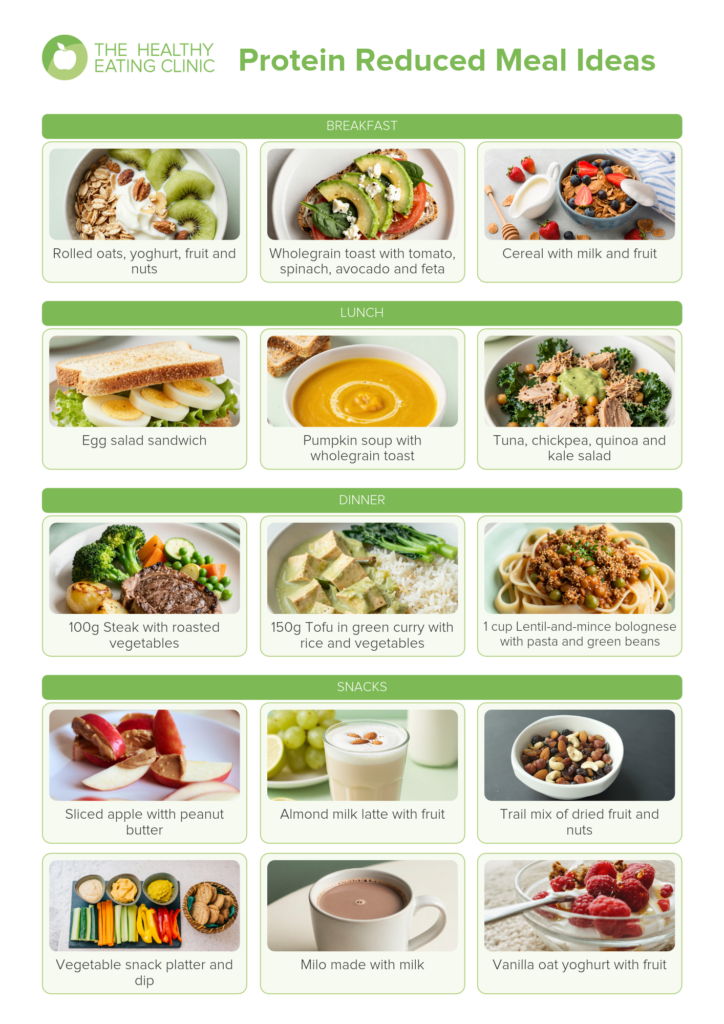
What could a day of reduced protein look like?
Here are some examples of meal ideas with a moderate protein load, without completely eliminating it.
Melissa Yip has both a keen interest and practical experience in supporting clients with kidney health and chronic kidney disease. If you are looking for guidance with protein and kidney health, book in with Melissa today!!